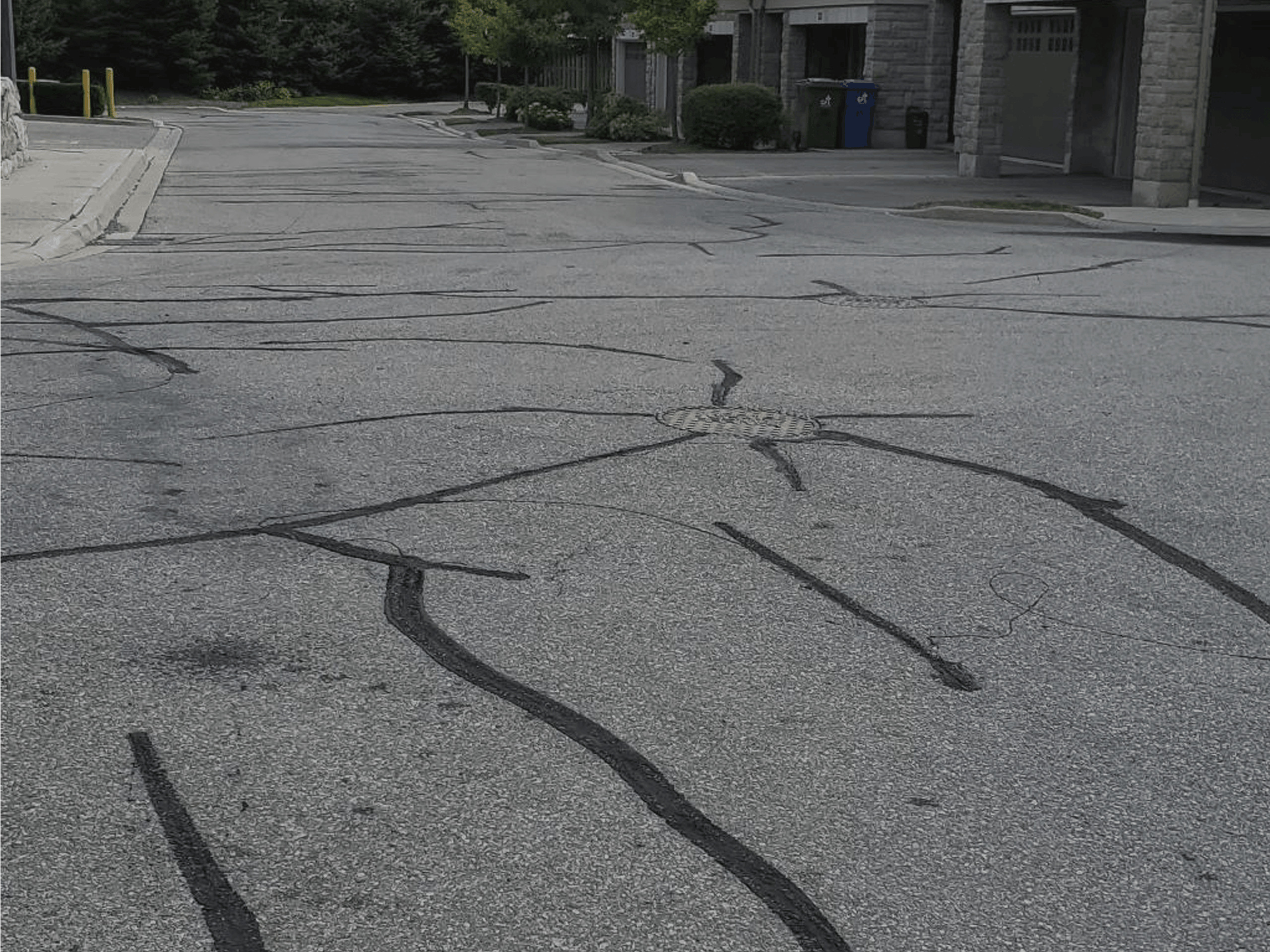
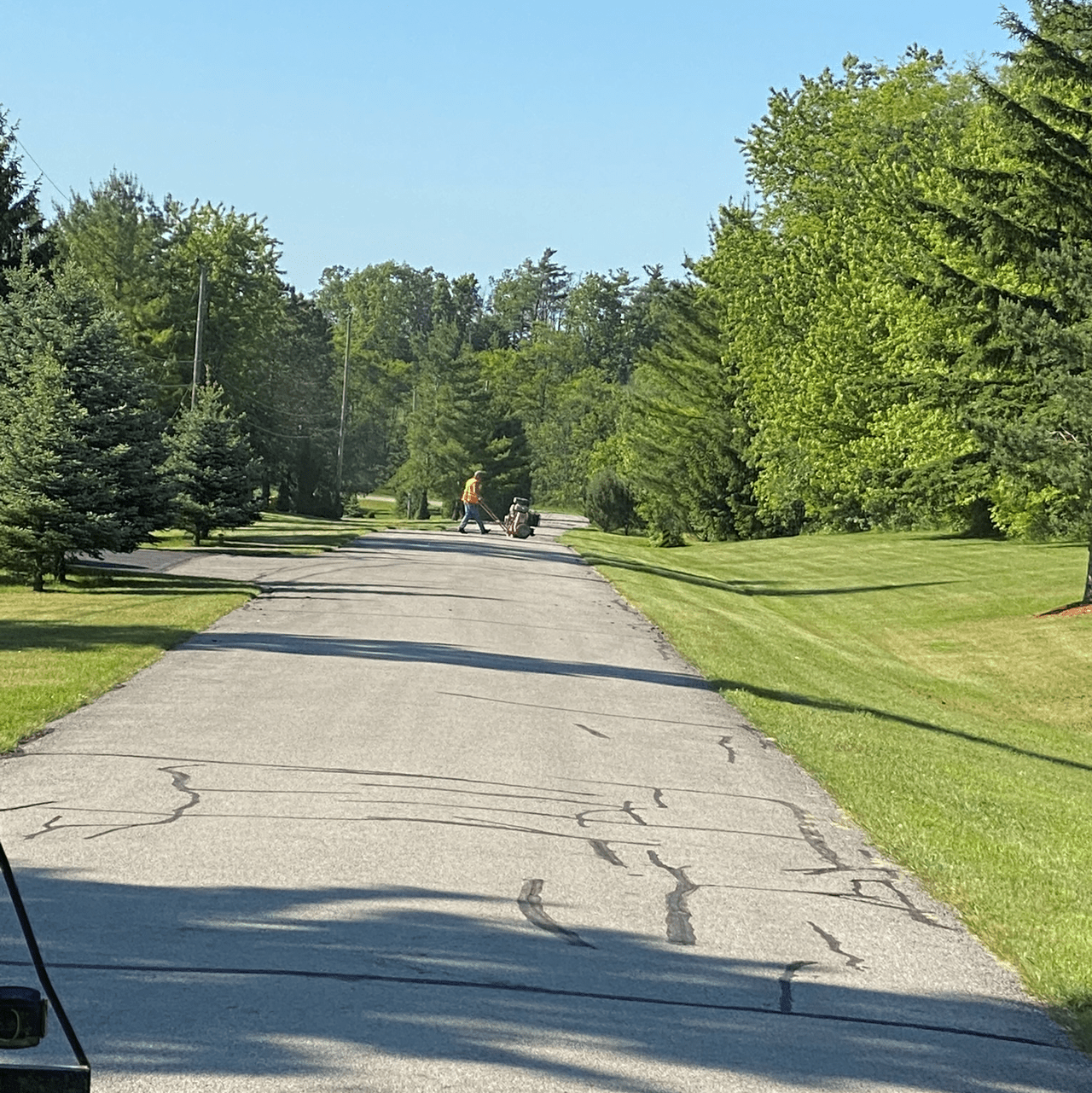
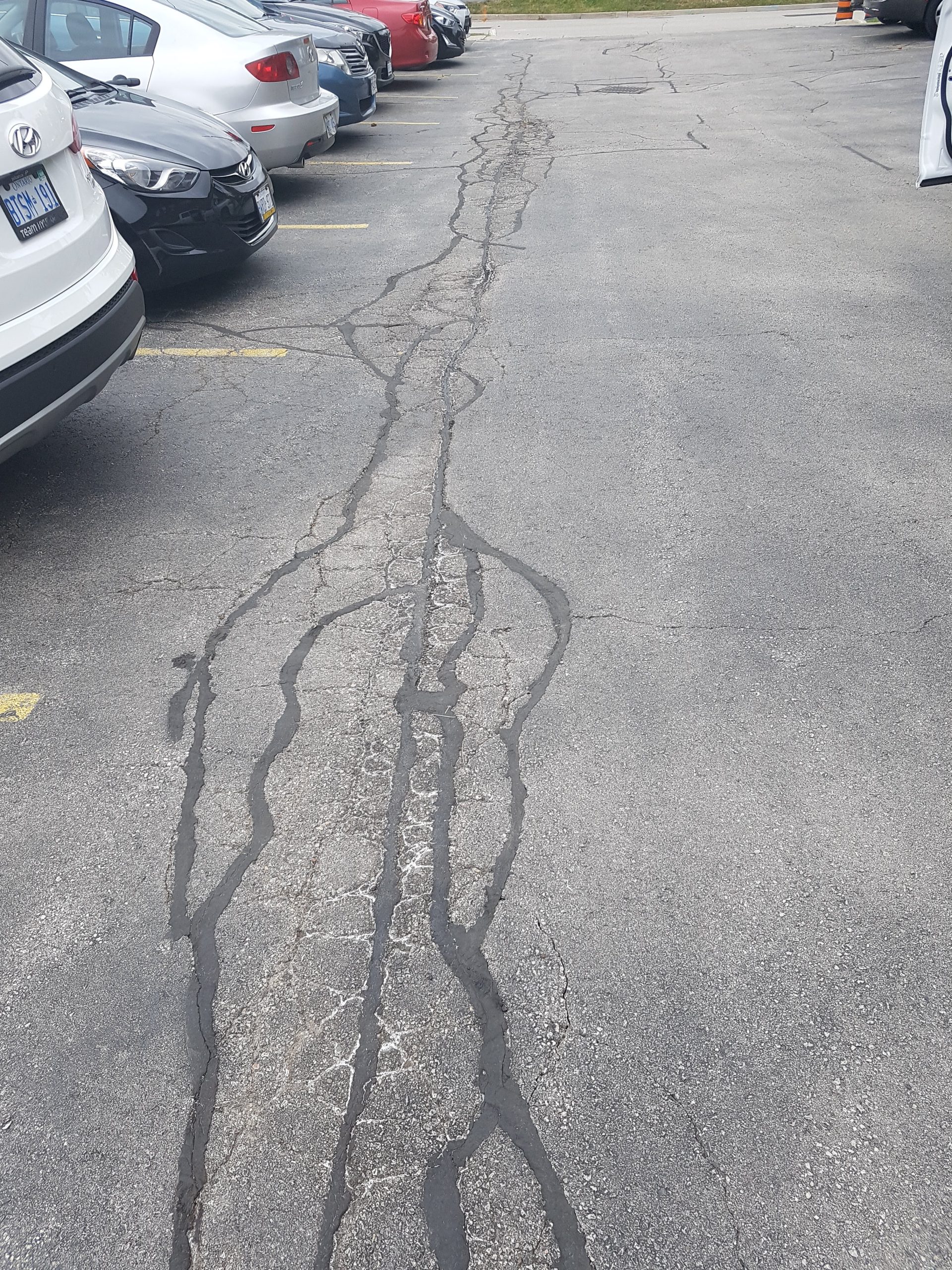
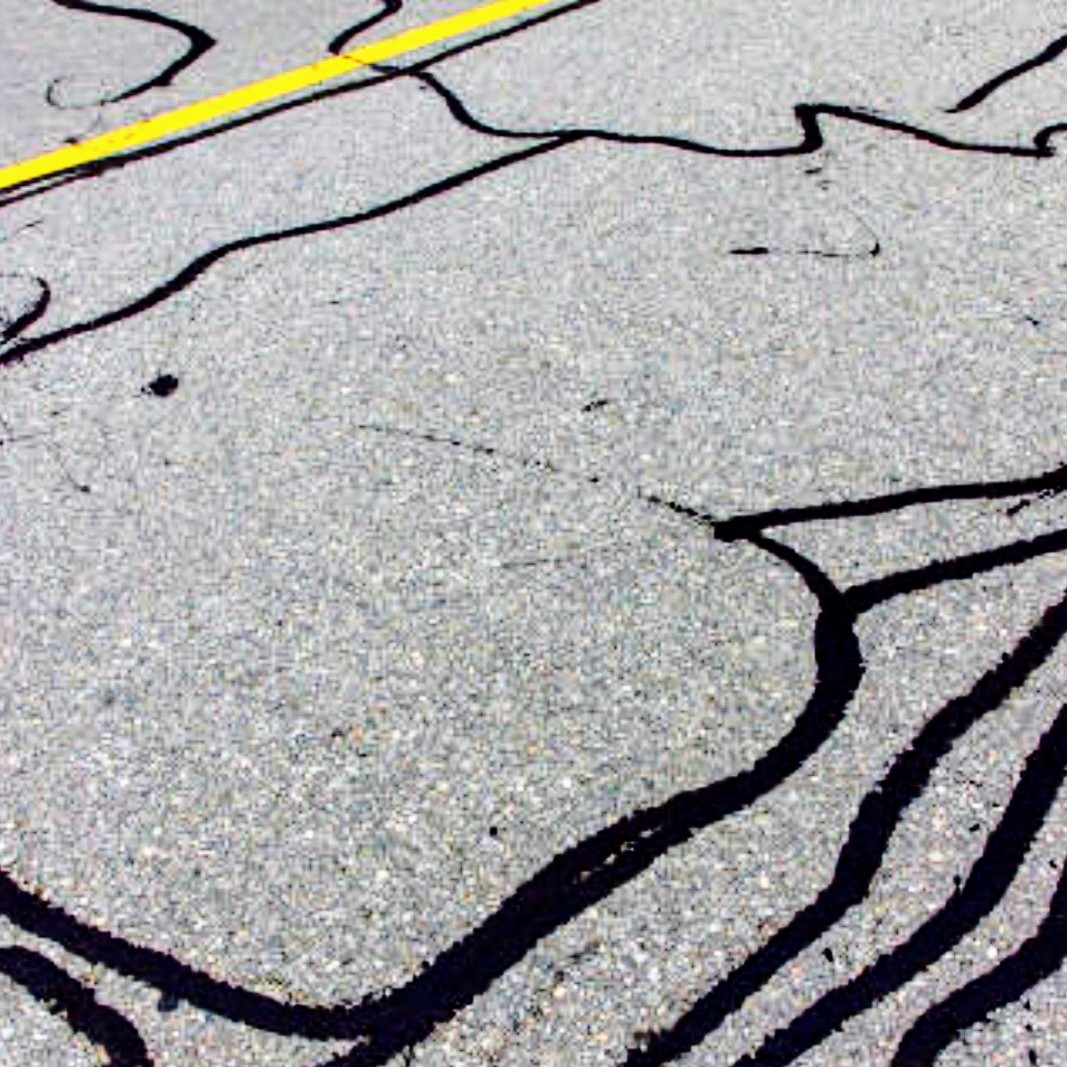
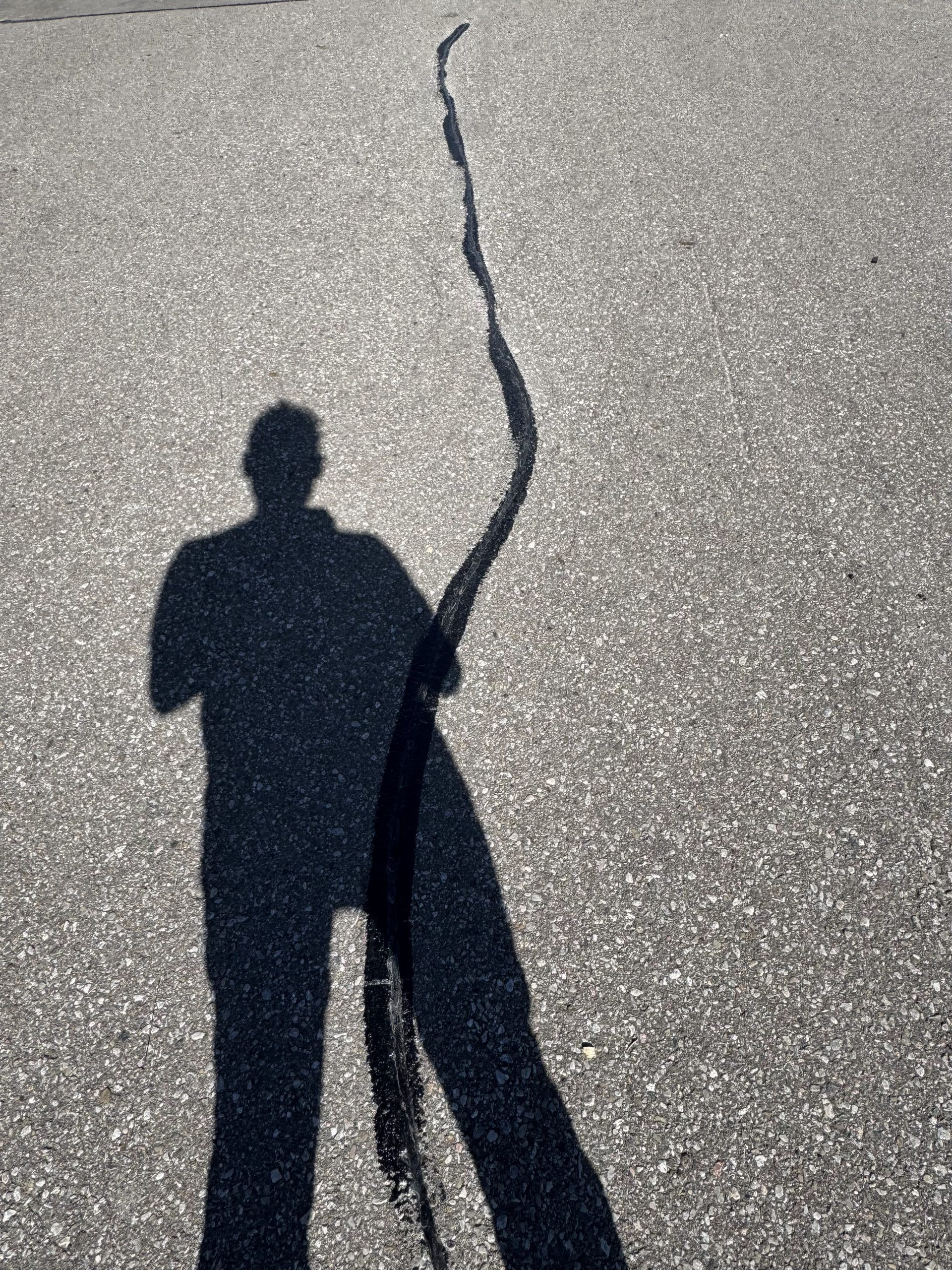
Hot pour rubber crack sealing is a preventative asphalt maintenance service used to stop cracks from spreading and prevent water from damaging the pavement base. The process involves cleaning the cracks, routing larger seams if needed, and removing debris to ensure proper adhesion.
A heated, flexible rubberized sealant, which is often an MTO-approved compound, is then poured into the cracks to create a durable seal. This material expands and contracts with temperature changes, helping extend the life of the asphalt surface. Regular crack sealing helps reduce costly repairs and keeps parking lots safe and well maintained.
The cost of hot pour rubber crack sealing depends on the condition of the asphalt and the amount of cracking that needs to be repaired. A member of our team will visit the site to inspect the pavement and assess the number, size, and severity of the cracks.
This on-site review allows us to determine the most effective repair approach. After the assessment, we provide a clear and accurate quote based on the scope of work.
Hot pour rubber crack sealing provides a continuous, watertight barrier that prevents rain, snowmelt, and de-icing chemicals from entering the base, thus preventing potholes, heaving, and expensive structural damage.
Hot pour rubber crack sealing prevents small cracks from propagating and connecting, thus extending the life of your asphalt pavement and postponing expensive resurfacing or replacement.
Hot pour rubber remains flexible after it cures, allowing it to move with the pavement during freeze-thaw action and heavy traffic, thus maintaining a seal instead of cracking and spalling like rigid fillers.
Hot pour rubber crack sealants are designed to strongly adhere to the walls of the cracks with minimal shrinkage, thus preventing the sealant from pulling away from the crack walls and maintaining a tight seal.
Hot pour rubber crack sealant cures and cools much faster compared to cold pour rubber products, which means that lanes can be reopened faster, hence reducing downtime for businesses and visitors accessing your parking lot.
Heated application ensures that hot pour rubber flows deeper into the cracks and bonds well with the pavement, resulting in a tighter and longer-lasting seal compared to cold pour rubber products that may loosen and wash away with time.
Hot pour rubber remains flexible even after it has cured, meaning that it can expand and contract with temperature changes and traffic load, unlike cold pour rubber products that tend to harden, crack, and fail faster.
Since hot pour rubber resists weather, UV, and de-icing salts better, it is expected to last longer compared to cold pour rubber products, which means that you will not need to repair it as often.

We will send a quote within 24 hours and book a day that works best with your schedule

Before we arrive, the area we will be working on needs to be clean and dry for best results

To work on the area, all vehicles need to be relocated and the area blocked off from vehicles